He Protec He Attac He Will Never Be Back . 7 has been nominated as the acm radio station of the year 10 times and won this prestigious award 2005, 2009, 2011, and 2020. (previous page) ( next page) anthems by country (13 c) classical music by country (11 c) folk music by country (47 c) military music by country (24 c) music by century by country (1 c) music by genre by country (13 c) musical groups by. 🔥 25+ Best Memes About Attac Attac Memes from onsizzle.com Like a sick man getting his hunger back, biggs is a crime fighter again. Counter picking statistics for league of legends. Im jahr 2016 wird bei einem wohnungsbrand ein mann tot aufgefunden.
Dapatkan link
Facebook
X
Pinterest
Email
Aplikasi Lainnya
Normal Range Of Motion Neck In Cm
Dapatkan link
Facebook
X
Pinterest
Email
Aplikasi Lainnya
-
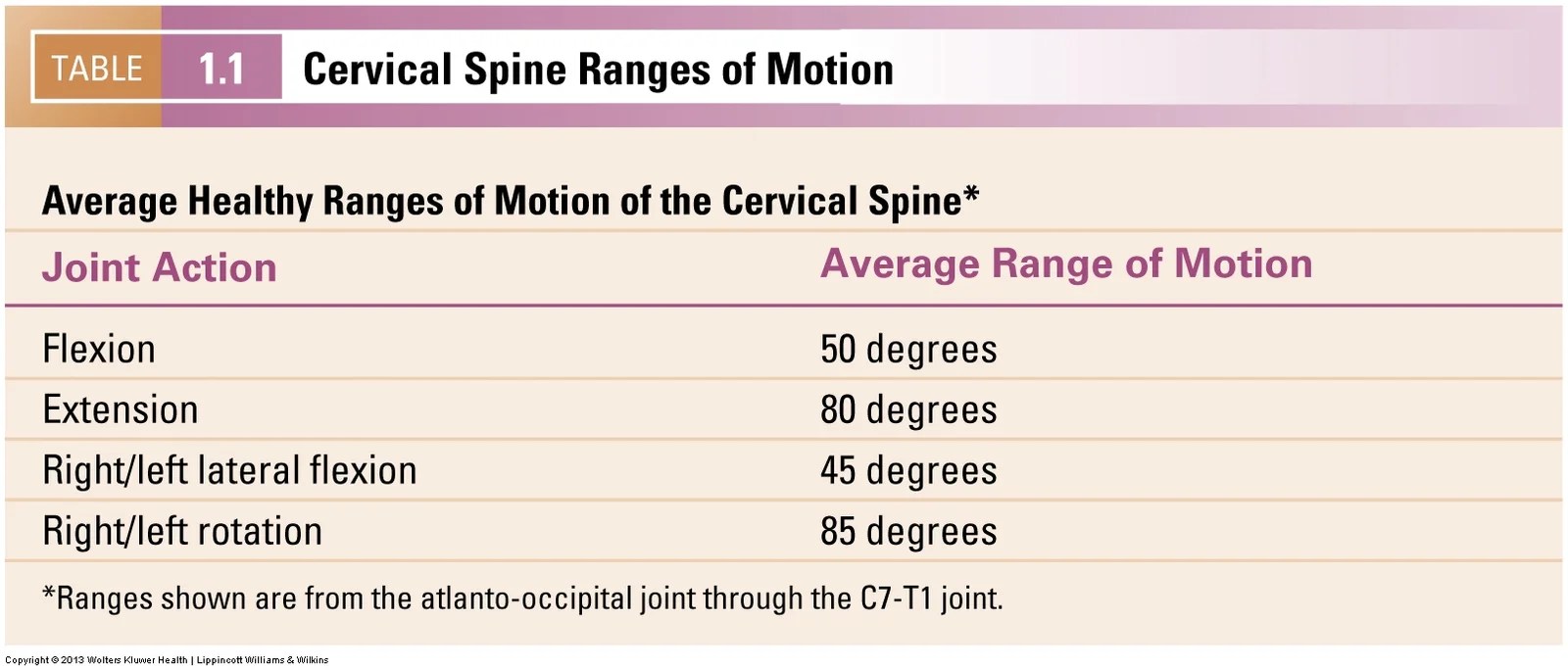
Normal Range Of Motion Neck In Cm. Neither palpation tenderness nor cervical range of motion were strong predictors of pain and disability in subjects with neck pain. Hip flexion rom tends to decrease from toddler to senior age although differences are generally small, ranging from about 4 degrees (males) to 10 degrees (females).
Axial and nonaxial ranges of motion of the Cervical Spine from learnmuscles.com
Cervical flexion and extension rom using a goniometer. Send us your video request. If joints which do not appear on this chart are affected, please indicate the degree of limited motion in your narrative.
The Normal Range Of Motion Of The Neck:
Flexion, extension, lateral flexion and rotation are all motions that the cervical spine does. These findings can assist physicians and physical therapists in determining the extent of disability and identifying activities that will likely be problematic for patients with limited cervical motion. Funds go solely to hosting and development costs that allow medical practitioners around the globe to freely access wikem.
There Is Restricted Joint Motion And Tight Muscles Along Both Sides Of The Neck And Into The Upper And Midback.
The following table provides the reference values along with 95% confidence intervals for normal range of motion for 11 measurements taken on 5 joints. Reference values for normal joint range of motion. In neck flexion, a normal range of motion is 40 to 80 degrees, which is measured by a device called a goniometer.
The Patient Undergoes Chiropractic Treatment.
Decreased neck rotation, neck retraction, and pressure pain thresholds were associated with higher disability. Hip flexion rom tends to decrease from toddler to senior age although differences are generally small, ranging from about 4 degrees (males) to 10 degrees (females). Neither palpation tenderness nor cervical range of motion were strong predictors of pain and disability in subjects with neck pain.
Lateral (Flexion) Extension 25O Flexion 90O Left 25O Right 25O Degrees Degrees Degrees Degrees 3.
So, it is important to pay attention to other symptoms along with loss of range of motion in the neck, as it could be a sign of something very serious. Similar to the c shape of a banana. The results of this study provide a baseline of the frequency and magnitude of neck motion during normal adls for the specified population.
This Shows How Far You Can Move Your Neck Without Experiencing Pain, Discomfort.
At least 50% of flexion and extension occurs between the. The cervical spine is more mobile than the thoracic and the lumbar spine and is designed to meet the requirements of positioning of the head in space and moving to alter the visual field. Upon examination, all neurologic signs are normal.
Narratives Routes And Intersections In Pre-Modern Asia 下载 . Discovering the riches of the word. Intersections crosses scholarly disciplines and generates inquiries that are transcultural and transnational, addressing the intersection of such issues as race and religion, generation and gender, politics… from venturebeat.com It examines how regions were connected by people, families, trade and politics as well as how they were maintained and remembered. Constructing the 'modern couple' in occupied japan 2010. Here are the 101 best sex scenes of all time, from steamy foreign classics to hollywood's lustiest movies like basic instinct and wild things
Dog Bark Naturals Vacuum . Your dog may become upset by barking at or chasing after the vacuum, so break it back with the vacuum in its hand once she’s calm down. Why are dogs scared of vacuums? Why Do Dogs Hate Vacuums? Stop Your Dog From Barking at from raisingyourpetsnaturally.com 4.5 out of 5 stars 886. Start your dog at a distance that he is comfortable with and then build up to him being close. Posted on february 05, 2015.
React Native Catch Error Message . 'let me share this text with other apps', }); Error boundaries are react components that catch javascript errors anywhere in the child component tree. Error fetch network request failed with reactnative from stackoverflow.com Using form component in app.js; One of the worst scenarios for a mobile application is crashing without handling the errors gracefully. This guide explains how you can fetch data in react, step by step.



Komentar
Posting Komentar